


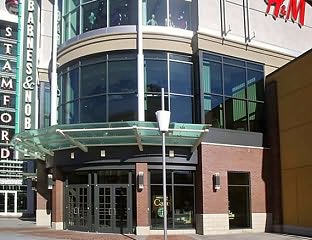
In 2007, when Barnes & Noble first opened in downtown Stamford, the shelves were adorned with newly-published books for adolescents and adults. Now, when you enter the bookstore, shelves are marked with clearance signs.
In April of 2026, Barnes & Noble announced that after nearly 19 years of serving customers, their downtown Stamford location would be shutting down.
When Barnes & Noble opened in 2007, it was the third bookstore in the Stamford Town Center, existing alongside Waldenbooks and Borders, which consolidated under one roof later on. Borders Books faced a slow decline, not paying their bills and not being able to deliver books to their location. Soon enough, Borders, which was the parent company of Waldenbooks at this point, filed for bankruptcy in 2011. Barnes & Noble now was the only bookstore in the Stamford mall and quickly became a spot for the community to read and take their children there. Today, they service 150 to 300 customers daily.
So why is Barnes & Noble closing?
The answer, according to employees, is not due to one sole cause, but several pressures acting at once. The store’s lease is ending. The building has no walk-in freezer, which hinders the food options. Air conditioning systems are faltering. Fixing all of this would take substantial investment for a store whose future was already complicated by the new Barnes & Noble opening in the High Ridge Shopping center.
“It’s just when a lot of things line up. Like, our lease is up, we have a new store. There’s things going on here that would take considerable investment,” said Brett Williams, the manager of the closing location.
The opening of the High Ridge Barnes & Noble was not conceived to replace the downtown location, Williams noted. The original plan was to have two bookstores in Stamford. However, the city later decided that one bookstore would suffice, and the Downtown location got the short end of the stick.
The downtown location closing will impact Stamford citizens considerably, especially residents living downtown and in southern Stamford areas who have depended on the location for books for years. Kim, an employee who has worked at the Downtown Barnes & Noble ever since it opened, and at Waldenbooks before, stated she has heard the frustration firsthand.
Kim remarked, “I have people saying that they don’t want to go up, you know, it’s like another city. The people [that live in downtown Stamford] don’t have cars. It’s like New York City. They don’t want to have cars anymore. So to get up there, you need a car or take a bus.”
Williams said that Barnes & Noble evolved to be more than merely a bookstore. The customers that walk in the doors had their childhood in here, and now bring their children,
“I think people had their childhood here,” he said. “And now they’re adults, and they’re bringing their kids here. It’s something that is tradition for readers to go to their local bookstore.”
Yet Kim noticed how consumer patterns have shifted over time. She said that as her years at the bookstore accumulated, she noticed changes in the community from when she first started working at Waldenbooks in 1989 before working at Barnes & Noble now. When Waldenbooks was open, crowds of people were typical to see in the store. When audiobooks increased in popularity, the store experienced a decrease in customers. In the 2000s, the bookstores faced a larger decline.
Kim alluded to the implications of artificial intelligence and technology on future generations’ reading habits.
“Some of us would talk about it sometimes and say, ‘Gee, you know, we’re not really getting the young people.’ They come in here, and they’ll get something to drink, and then they leave, don’t even look around. So I was starting to see little hints. If the next generation goes even further into technology and AI comes, so I don’t think bookstores are gonna be like you see them. But each generation that comes up, I’m afraid they’re gonna get farther and farther away from [reading],” said Kim.
The connection residents have with this Barnes & Noble was apparent when the closure was announced.
Sophomore Astrid Moquete-Blomstrom said, “The Downtown Barnes & Noble’s position in the central area made it not just a place to gather, but somewhere people could encounter new ideas. What I’ll miss most is the sense of community it created.”
The store announced their final date in the building would be July 15, 2026.