


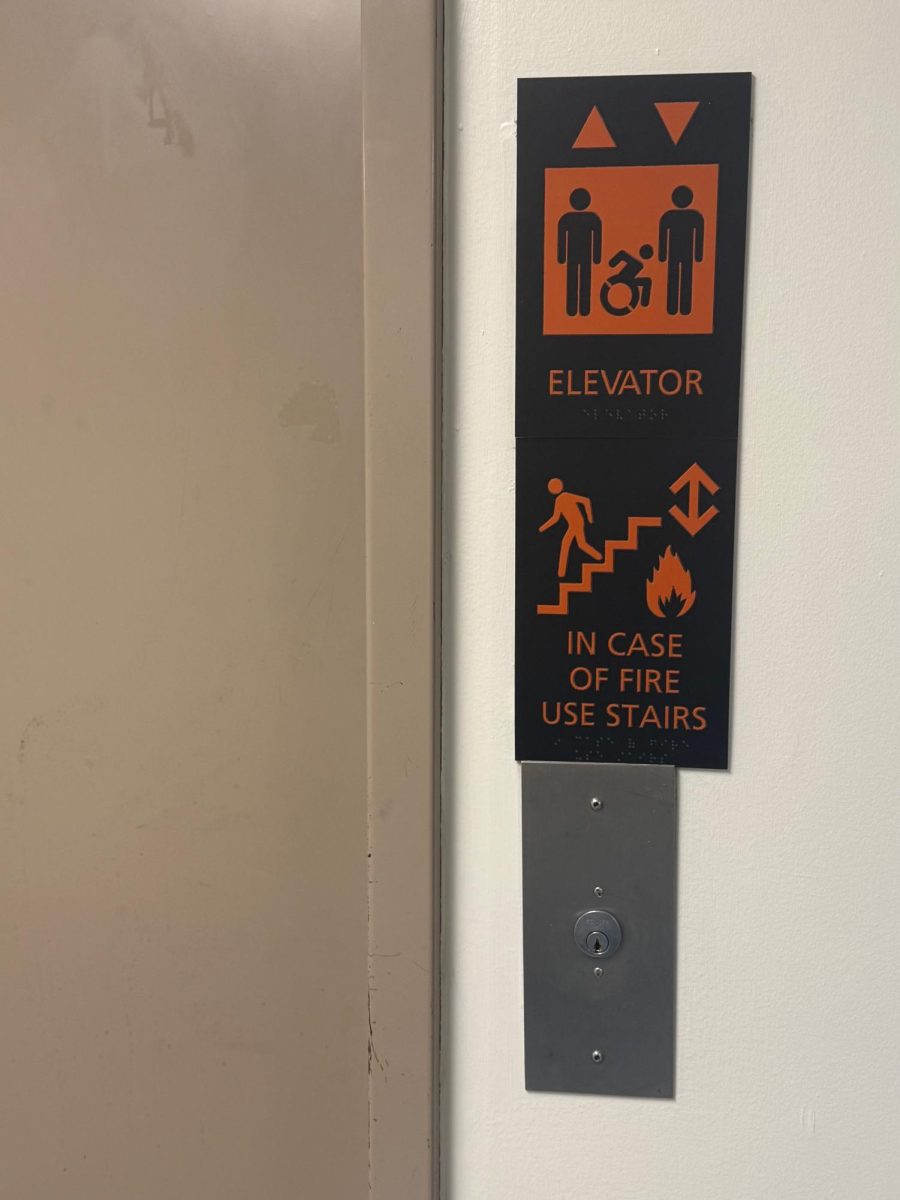
It’s March 30th, a surprisingly cold Monday morning after an incredibly long weekend. Working 20 hours and spending another 16 studying or doing homework from Friday through Sunday, I was exhausted. It was an A-Day, and my first period on the first floor. Like most students and teachers, I entered through the back of Stamford High School (SHS).
For some perspective, getting from the back of the school up to the first floor, leaves you with two options: walk up the incredibly steep driveway (and dodge cars that are coming in both directions), or go through the inside and climb three full (arguably steeper) flights of stairs. Now, as a young high school student, three flights of stairs may not seem like much – but let’s add context.
I’ve told you the context of my laborious weekend, but what about my peers? One of the girls I was with this morning has practice every day after school and chooses to practice on the weekend to hone her skills, something very common for students who are varsity athletes. The other girl I was with had a more relaxing weekend, but still had work and family obligations, as well as a mountain of homework that she got through. With all of this in mind, coupled with the fact that we all have another friend with an elevator key, we thought it’d be a great idea to not tire ourselves out further before the day even started, and ask our friend to use their elevator key. Our friend obliged, and used the key to call the elevator down to the fourth floor where we were.
So what’s my point? We were casually waiting for the elevator when a teacher interrogated us and asked if we all had a reason for “being around the elevator” or if we all had an individual key. We answered no, and she abrasively told us “You can’t just take the elevator—you’ve gotta walk.” Annoyed, we walked off and I muttered something like “You don’t even have a reason to take the elevator obviously.”
So I got to thinking, and she didn’t even appear to have a reason to take the elevator. To be fair, she may have had a long weekend, but so did the rest of us, and that fact has no effect on our elevator-permissions, so it shouldn’t have any effect on hers.
It is understandable that the elevators in SHS, of which there are many, are a privilege that keeps everything fair. I agree that it should be reserved for people with disabilities or those who need to be in a specific location in a short amount of time; like security guards who need to quickly respond to safety concerns.
SHS has been directly violating the fairness of the elevator privilege by giving every teacher an elevator key. It is simply unlikely and untrue that every teacher (or substitute) has a disability that prevents them from walking up the stairs like us students. Unless you are counting age as a disability; Although, as a society we should encourage people to exercise more as they age–to promote a longer life span and better overall health–suggesting that maybe teachers should walk up more stairs than their students.
One can argue that teachers must be in their classrooms before their students, and in order to beat their students there, they may need the elevator. But, plenty of students get to school with ample time to spare before the bell without using the elevator–so why can’t that same test of accountability be afforded towards teachers?
To be clear, I’m not suggesting that Stamford High revokes every teacher’s elevator key privileges. I am simply suggesting an enforcement of the rules.
It is ridiculous to think that some Stamford High handbook says: The elevator key is a privilege that will be granted to those: with disabilities that prevent them from walking, security guards, administrators, the principal and vice principal(s), English teachers, Math Teachers, Gym Teachers, students and their paras (but not without a para), temporary security guards……., and whoever else feels like it except lone students.
The list can go on. And as this list goes on, it completely violates the rule of an elevator key being a privilege. A privilege, as Oxford puts it, is “a special right, advantage, or immunity granted to a particular person or group.” Giving virtually everyone a ‘special privilege’ only makes it not a privilege–now it’s more of a lax rule that you can choose whether or not to follow.
It’s understandable that if a student who doesn’t have a disability (like myself) uses the elevator, they may be taking the opportunity of using the elevator away from someone who actually needs it. But, countless teachers and substitutes take the elevator everyday, and only a small number of students do. Evidently, the people who are taking the elevator away from those who need it may actually be our teachers.
The solution? I’m not entirely sure, but let’s go back to our context. My friends and I all had long and tough weekends. And we must note that the teacher who forced us away may have also had a long weekend that also convinced her to take the elevator. But she holds a key and we don’t.
Overall, I’m suggesting that we be more considerate of everyone’s circumstances (even those that are hidden) that may lead them to take the elevator. We must understand that the elevator key debate is confusing and may never reach a conclusion where all groups are happy and treated fairly– and thus we should just let things be as they will.
Maybe if we see someone else taking the elevator before the first period, we should just say “good morning,” smile, and mind our business.